01 —
Color Inconsistency
Yellowing or unwanted color shift:
A finish changes the intended appearance of the design.
Batch-to-batch mismatch:
Bulk or repeat orders differ from the approved color reference.

JEWELRY PLATING QUALITY · BRAND TRUST
If a previous order faded, peeled, or failed to match your approved sample, discover how WEMOIS works to reduce the risk of those problems recurring.
For growing jewelry brands, a finish must do more than look beautiful on the first sample. WEMOIS carries out plating in-house, managing plating requirements and production consistency to support more reliable bulk and repeat orders.
WEMOIS manages jewelry plating through dedicated-tank arrangements, client-specific process specifications, approved color references, retained batch samples and practical wear testing. These controls help identify quality risks earlier and improve consistency between approved samples, bulk production and repeat orders.
THE VISIBLE CONSEQUENCES
A plating problem rarely ends with one faulty piece. It can affect customer satisfaction, returns and confidence in your next collection. The most common concerns fall into three groups.
A finish changes the intended appearance of the design.
Bulk or repeat orders differ from the approved color reference.
Surface discoloration makes jewelry appear worn or poorly finished.
A coating lifts away, sometimes exposing the underlying metal and prompting complaints.
The finish gradually loses its original color and appeal.
Reduced luster makes a piece look less attractive than expected.
Your customers see the finish. Your brand carries the consequences.
THE ROOT CAUSES
The problem is rarely “bad plating” in general. It's usually four things going wrong before or after the plating step.
 Bad plating · Skin discoloration
 Bad plating · Coating loss at the clasp
When specifications aren't separated clearly, process deviations stay invisible—until the bulk order arrives.
A pendant, a ring, an earring, a hollow design, and a solid piece don't present the same plating challenge. Different structures need different plating schemes and pre-treatment methods—current distribution, racking, and surface access all change with geometry. When one approach is applied across different structures, the finish may pass on the sample and fail on the piece your customer wears.
Plating quality depends on the full process chain: equipment stability, current level, plating time, tank temperature, plating formula, drying temperature and duration, and pre-, in-process, and post-plating handling. When any link in that chain is uncontrolled or based on guesswork rather than validated parameters, the finish may look correct on day one and still fail weeks later.
Without a stored reference and production records, sample quality is hard to reproduce in bulk, and almost impossible on reorder.
Reliable plating starts with clear specifications—and the discipline to follow them.
THE WEMOIS APPROACH
Different brands need different colors, finishes, quality levels, and cost structures. We don't treat every order as interchangeable. WEMOIS carries out plating in-house, with client-specific requirements defined and monitored throughout production.
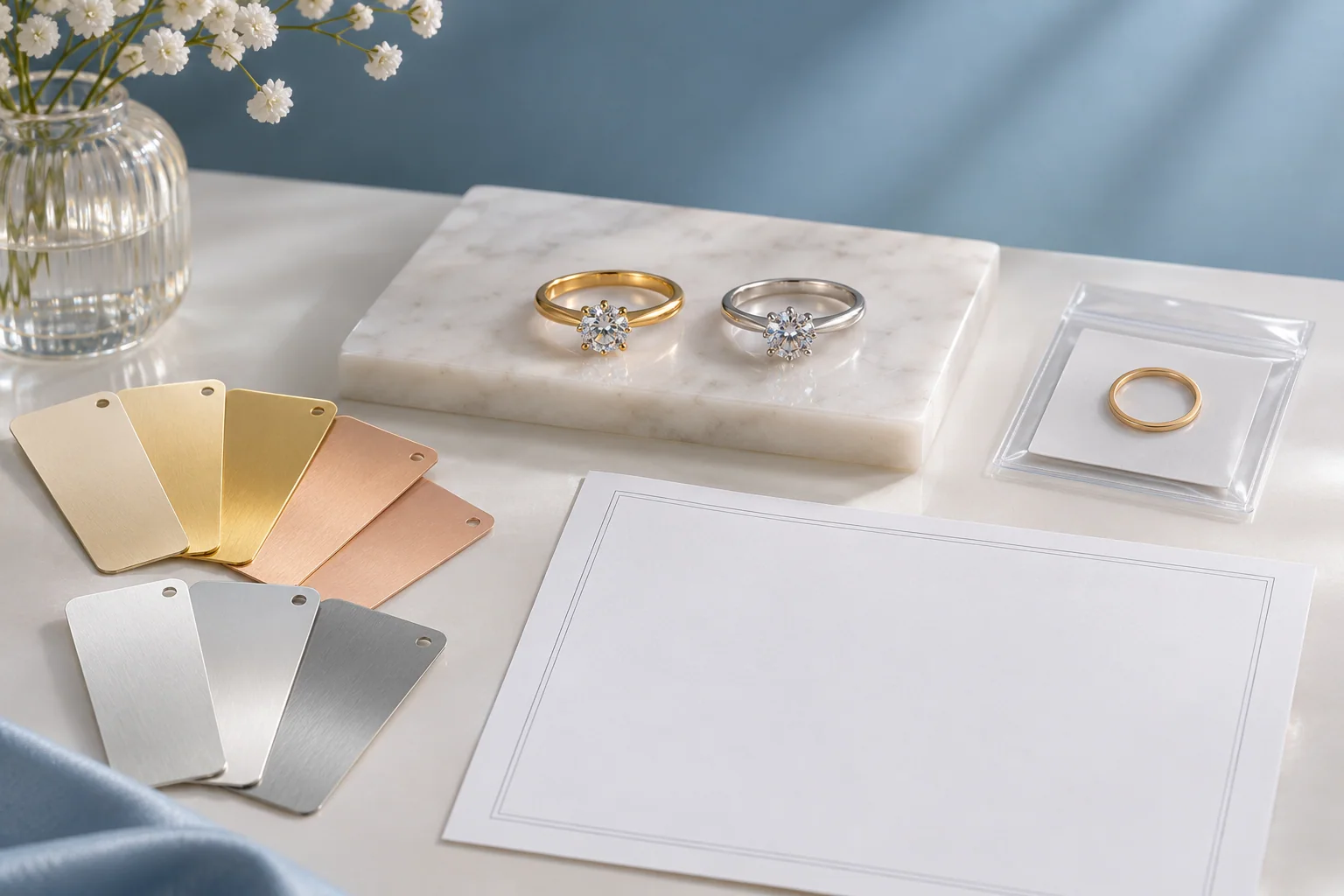
Plating work is separated by customer requirement—not pooled across orders. Each client's plating sequence, treatment conditions, and coating specifications are documented and kept on file. Process parameters—including current, time, tank temperature, plating formula, and drying conditions—are set per specification. We periodically review our in-house plating production records against those specifications.
Every client gets a dedicated process specification: agreed sequence, treatment conditions, coating requirements, and finishing details. Where a collection includes different structures—pendants, rings, earrings, hollow and solid designs—the plating scheme and pre-treatment are specified per structure, not applied as one blanket process.
We add a wear-resistant protective layer after plating. When a design needs more coating or gold-layer thickness, we weigh the quality benefit against the added cost and recommend a practical balance.
When genuine gold electroplating is specified, we require real gold electroplating—not a merely gold-colored substitute misrepresented as gold plating. The actual gold specification must match what is agreed with the customer.
Approved color references are provided to our in-house plating team before bulk production. Representative samples are retained after each run for color comparison, quality review, and future reorders.
A dedicated plating plan. A controlled process. A consistent reference for the next order.
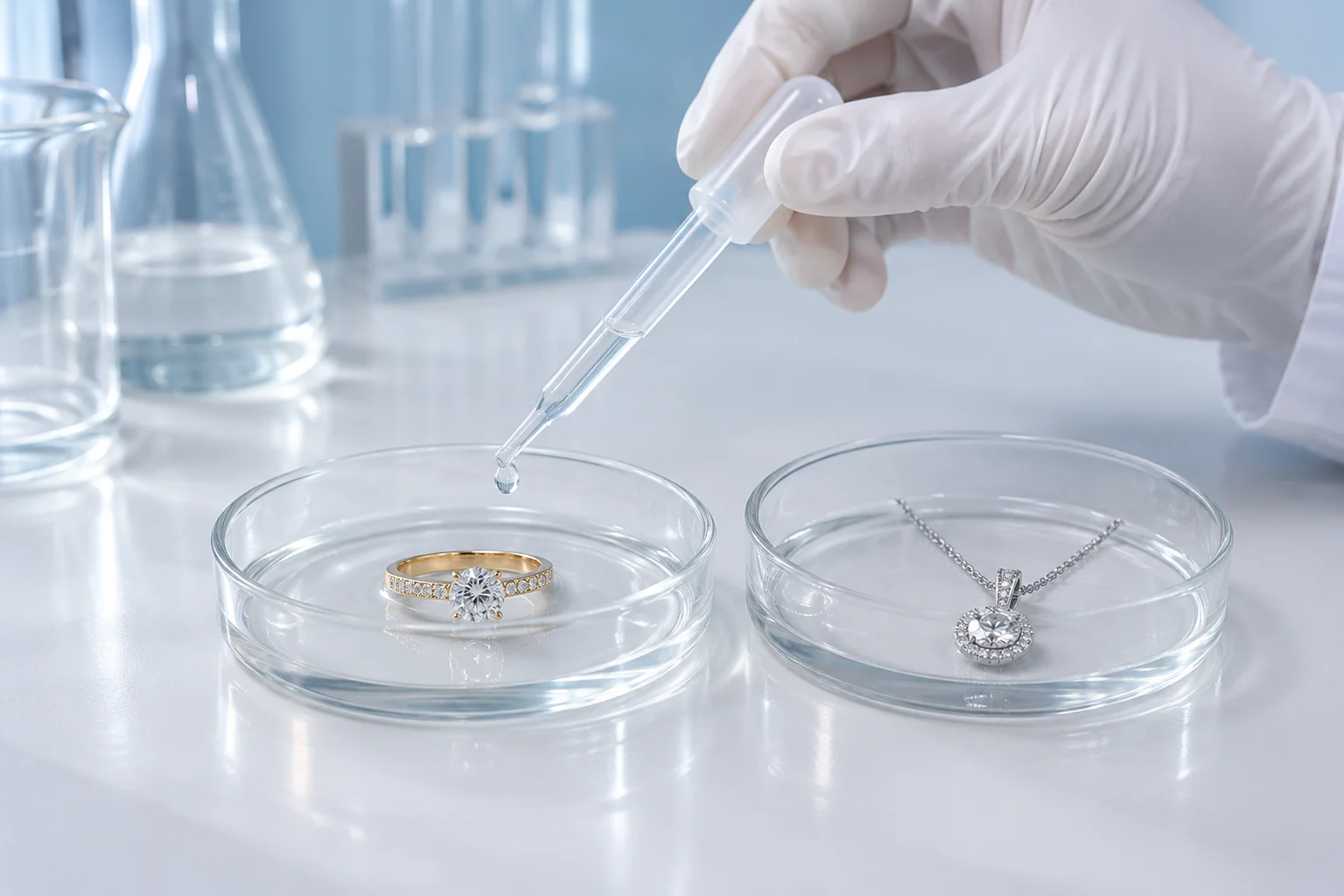
Our standard water-based plating is tested to a 1-year color-retention standard. Our vacuum plating (PVD) is tested to a 2-year standard. These are laboratory test benchmarks, not a fixed guarantee for every product and every wearer.
Actual color retention depends on coating thickness, base metal, friction points (rings and bracelets wear faster than pendants and earrings), sweat and skin chemistry, and contact with water, perfume, and cleaning chemicals. WEMOIS sets the plating specification against your target quality level and provides care guidance you can pass to your customers. If you need a specific durability expectation for a design, tell us the wearing scenario and target market—we‘ll discuss what the specification can realistically support.
QUALITY BEYOND APPEARANCE
Visual appearance and color checks are the starting point. We also evaluate selected samples through practical wear and exposure trials to observe how a finish performs beyond the first inspection.

Selected jewelry samples are worn during everyday activities and reviewed for color shift, surface changes and finish condition.

Selected samples are repeatedly rubbed against A4 paper and checked for visible wear, surface changes or color transfer.
 GoodBad
Selected samples are immersed in seawater for one month, then inspected for discoloration, corrosion and visible coating deterioration.
These are practical evaluations of selected samples. They do not replace product-specific compliance testing where required or guarantee identical results under every wearing condition.
Check the finish. Challenge the surface. Review the result.
Possible causes include inadequate base-metal preparation, poor coating adhesion, unsuitable process conditions or a finish that does not match real use. The specific cause should be assessed on the affected product and process.
We use approved color references, client-specific process requirements and retained samples from production runs. These provide comparison points for bulk work and future reorders; final color still needs to be checked against the approved standard.
Yes. Tell us your destination market and product requirements. For EU-bound jewelry, we can review applicable nickel-release requirements and help coordinate relevant third-party testing, including EN 1811 and EN 12472 where applicable.
LET'S TALK PLATING
Developing a gold-tone, silver-tone or custom-finish moissanite collection? Or dealing with peeling, fading or an unexpected color difference in a current order?
You don't need a complete technical specification to start. Share a reference color or approved sample, the base metal, your target market and estimated quantity. We'll review the requirements with you and discuss suitable plating specifications, protective finishing and sample-approval steps.
WEMOIS — MOISSANITE JEWELRY SOURCE FACTORY